AT A GLANCE:
+30% Buyer Recall | 2.3× Emotional Connection | 3 Buyer Pilots From One Meeting | +4 ft Shelf Space Won | Silver Brandon Hall Excellence Award

Mars Snacking (formerly Kellanova) needed retail buyers to see the whole shopper journey, not just the shelf. Roundtable Learning built a VR shopper journey that follows one shopper from her shopping list at home, through the store, and back home again, with Kellanova’s data at every decision. Buyers recalled 30% more than with slides.
The Challenge: Buyers Could Hear the Strategy, Not See the Shopper
Kellanova’s category strategy covers the full path to purchase. Its data shows 61% of shopping trips start online, long before a shopper reaches the shelf.
But category reviews were still slide decks focused on the aisle. Buyers heard the strategy without ever seeing how a shopper’s choices at home connect to what she puts in her cart. The story didn’t land.
The Stakes:
- Buyers tuning out "death by PowerPoint" presentations
- No way to show the omnichannel journey in a conference room
- Category insights forgotten soon after the meeting
- Proposals stuck in weeks of follow-up
The Solution: A Full Day in the Shopper's Shoes, From List to Watch Party
Roundtable Learning built a custom VR experience that puts the buyer in the shopper’s shoes for an entire trip. Instead of being told what drives purchases, buyers watch it happen and see the data behind it.
Walking the Shopper Journey
A parent plans a game-day watch party, building a list with a voice assistant while digital recommendations shape the cart before she leaves the house.
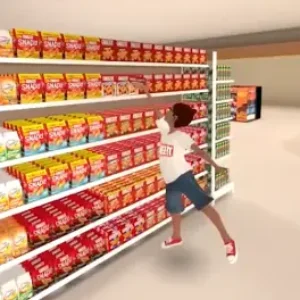
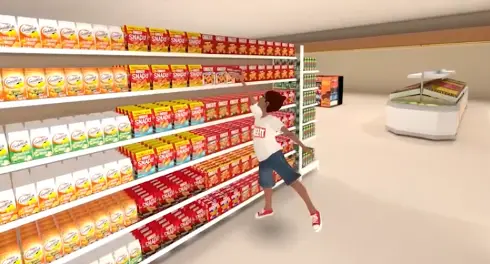
Front-of-store displays and a game-day endcap show what catches her eye first, built to real in-store execution standards.
Buyers watch product placement drive her choices, with data explaining why. When Cheez-It leads the cracker aisle, Kellanova’s data shows category sales lift 2–3 points. In the companion Lead the Aisle module, buyers switch between three planograms and watch the numbers move.
As she collects her order, an overlay shows 44% of shoppers add extra items at pickup.
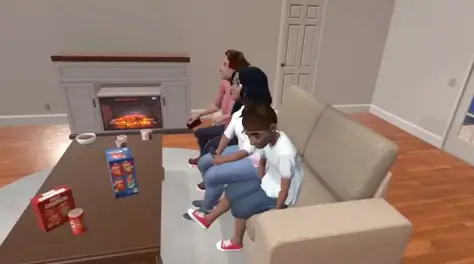
She snacks on the go in the car, then joins the family watch party, closing the loop on the full journey.
We transformed traditional category reviews and buyer engagement into interactive, story-driven experiences that brought our insights, products, and customer stories to life in entirely new ways.
— Nicole Kramer, Senior Manager
Capability Building & Strategic Planning, Mars Snacking
One Story, Two Wins
- For Kellanova: every scene reinforces its sales strategy, from leading the aisle with power brands to connecting digital and in-store campaigns.
- For the buyer: they see what drives their shoppers and how the strategy grows their category sales, backed by data.
Built to Feel Real
Buyers walk real stores every week, so every SKU, shelf, and display was modeled against real planograms. Diverse animated households, scene-by-scene sound design, and 3D charts that float through the space keep buyers immersed. A Roundtable team member even performed the child character’s movements in a motion capture session.
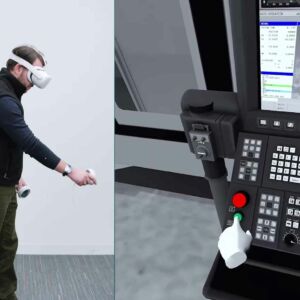
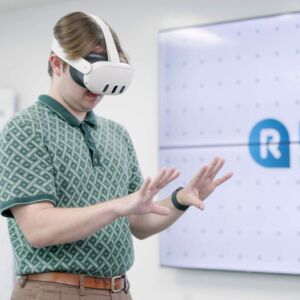
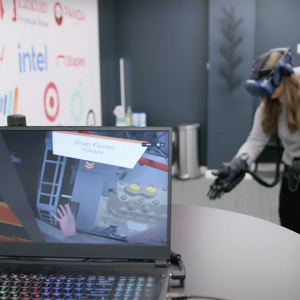
Each experience runs 4–5 minutes and casts to a shared screen while a trained sales lead guides the discussion.
The Results: 30% Better Recall and 3 Pilots From One Meeting
Seeing the whole journey changed how buyers engaged. One week later, buyers who experienced the content in VR recalled 30% more key category facts than a control group who saw the same content on slides. The program also earned Silver at the Brandon Hall Group HCM Excellence Awards.
What Changed for the Client
Buyers started deciding in the room. One regional grocery buyer approved a shelving pilot on the spot, skipping weeks of follow-up. Three test-and-learn pilots came out of a single executive top-to-top meeting.
The data finally stuck. Buyers recalled specific numbers they’d seen in the journey and reported a 2.3× increase in emotional connection versus traditional meetings. One retail partner later expanded Mars Snacking’s shelf space by 4 feet, crediting the VR visualization in part.
Customers started sharing it. A wholesale cooperative featured the experience at multiple retailer events, reaching dozens more executives at no added cost. A national distributor is now discussing a custom module of its own.
The sales team got stronger, too. Reps gained confidence leading executive conversations, and the VR training contributed to a 75% retention rate for new hires. Mars Snacking is now extending the approach to frozen breakfast and its broker network.
Results at a Glance:

Brandon Hall Award Winner — Best Extended Enterprise Learning Program, 2026
See how Roundtable Learning builds custom VR experiences that turn your sales strategy into a journey buyers can see, feel, and act on.

Frequently Asked Questions
What is a VR shopper journey experience?
A VR shopper journey experience lets someone walk in a shopper’s shoes through the full path to purchase in virtual reality. It typically follows the shopper from planning and list-building at home, to the store entrance, through the aisle where product placement shapes choices, and back home again. Data overlays at each step explain why shoppers behave the way they do.
How can CPG brands use VR in retail buyer meetings?
CPG brands can use VR to show retail buyers how their shoppers actually plan, shop, and buy, instead of describing it on slides. Buyers can walk a true-to-life store, see a proposed shelf set or display in place, and watch sales and shopper data respond. It turns a category review into a shared look at what grows the category for both the brand and the retailer.
Does VR improve retention compared to PowerPoint?
In this case study, yes. Retail buyers who experienced Mars Snacking’s category content in VR recalled 30% more key facts one week later than a control group who saw the same content on slides. Buyers also remembered specific numbers they encountered in the experience, the kind of detail that is usually lost in a static report.
How do you run a VR experience in a live sales meeting?
Keep the experience short, around 4 to 5 minutes, so it fits inside a standard meeting agenda. One participant wears a standalone headset while the view casts to a shared screen, and a trained facilitator pauses for discussion. A brief in-headset tutorial helps first-time VR users, and a backup video covers noisy or crowded rooms.
What is VR sales enablement?
VR sales enablement uses virtual reality to help sales teams sell, either by training reps in realistic practice scenarios or by putting customers inside an immersive experience during the sales conversation. In customer-facing use, a buyer wears a headset and walks through the store, product, or strategy instead of watching slides. The goal is faster understanding, stronger recall, and quicker decisions.
Explore more