AT A GLANCE:
95% Recommendation Rate | 93% NPS | 85% 8-Month Retention Rate | 566 Leaders Trained Across 22 Brands | $8.8m Projected Savings | Brandon Hall Gold Award
Frontline Leadership Development: 95% Recommendation Rate
The Challenge: Building a Shared Leadership Culture Across 22 Brands
Rollins, Inc. — $3.4B in revenue, 20,000+ employees, and a portfolio of 22+ brands including Orkin, Saela, Fox Pest Control, and BugHouse — had grown significantly through mergers and acquisitions. With that growth came a need: a unified leadership development approach that could work across every brand and reflect CEO Jerry Gahlhoff Jr.’s Vision 2027 goal of leaders spending 50% of their time coaching and developing their people.
No off-the-shelf program met the bar. Rollins needed something built for them.
The Stakes:
- 22+ brands, each with its own leadership development approach
- No common competency model or leadership language
- Goal to increase coaching time to 50% by 2027 for frontline leaders
- ~2,600 leaders across three levels without a centralized program
- A need to improve leader retention through development pathways
- External programs costing $2,600-$4,000 per person
Completely changed the way I am able to lead my team and continue my personal growth at Rollins.
— Program Participant, Rollins, Inc.
The Solution: The Co-Lab — Rollins' First Enterprise-Wide Leadership Program
Roundtable Learning partnered with Rollins to design the Co-Lab: A Rollins Leadership Experience, a blended learning journey targeting all 2,600 leaders across three organizational phases.
Every design decision was made to build real relationships across brands and make servant leadership practical, not theoretical.
What Made the Design Work:
Cross-Brand Cohorts: Facilitators can’t co-facilitate with a brand they’ve previously worked with. The result: every room is a cross-brand room, and the conversations that happen there can’t happen anywhere else.
The Cascade Rule: Participants attend after their direct supervisor — not before. That sequencing means shared language and frameworks can be applied in real conversations immediately, with alignment flowing in the same direction as accountability.
CEO in the Room, Every Session: The CEO personally opens and closes every cohort with his annotated book club notes embedded in the curriculum. When participants know the CEO built this and shows up for it, the program carries a weight no external vendor can replicate.
Co-Lab in a Box: Roundtable Learning developed a complete facilitation kit — materials, branded supplies, facilitator resources — shipped to every regional location so delivery quality is consistent across all 22 brands.
Integrated Into Talent Review: Co-Lab competencies are formally tracked in Rollins’ Talent Review process. This isn’t a standalone training event — it’s part of how Rollins evaluates and advances its leaders.

How the Program Is Structured:
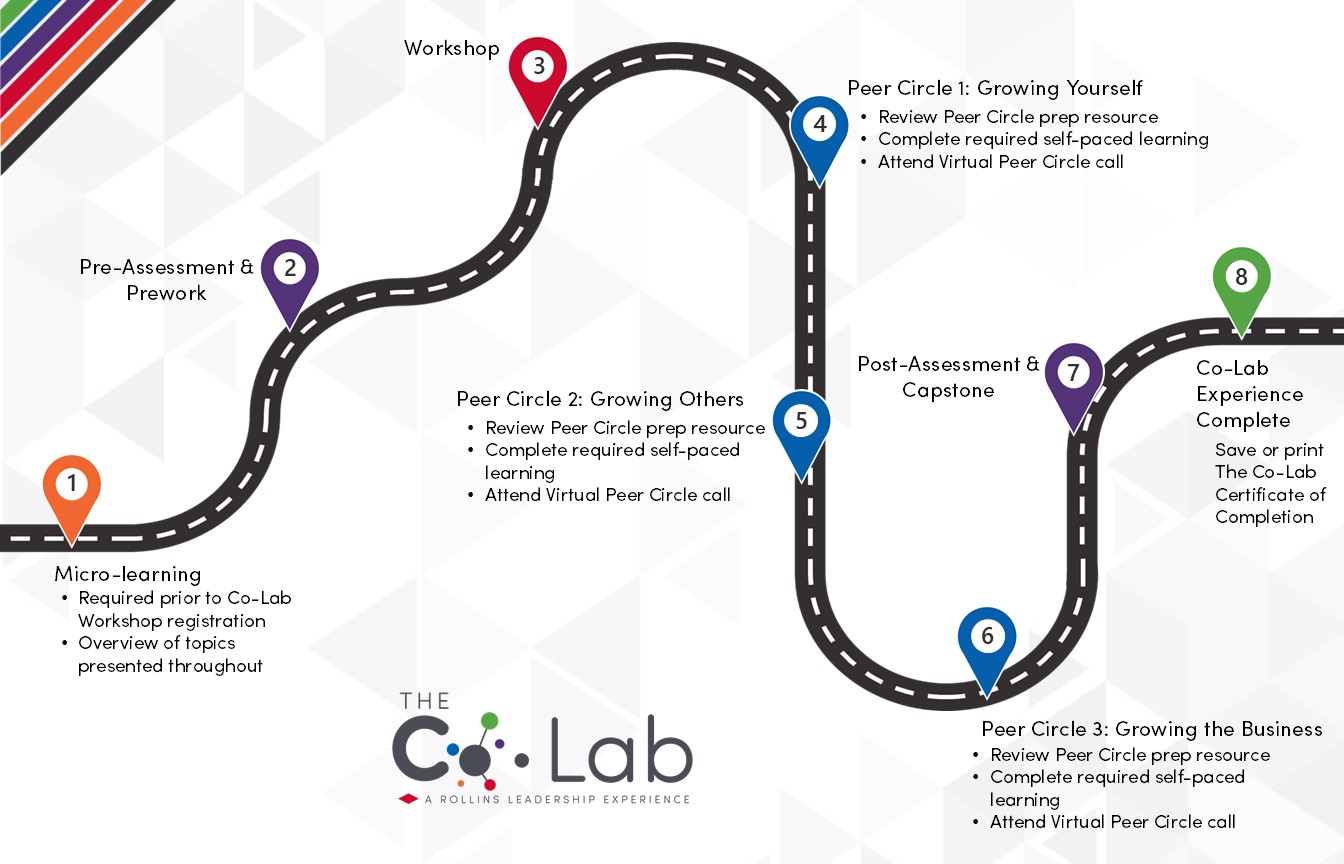
Participants complete prerequisite microlearning and a behavioral self-assessment before attending. A 90-day calendar review surfaces how they’re currently spending their time as a leader.
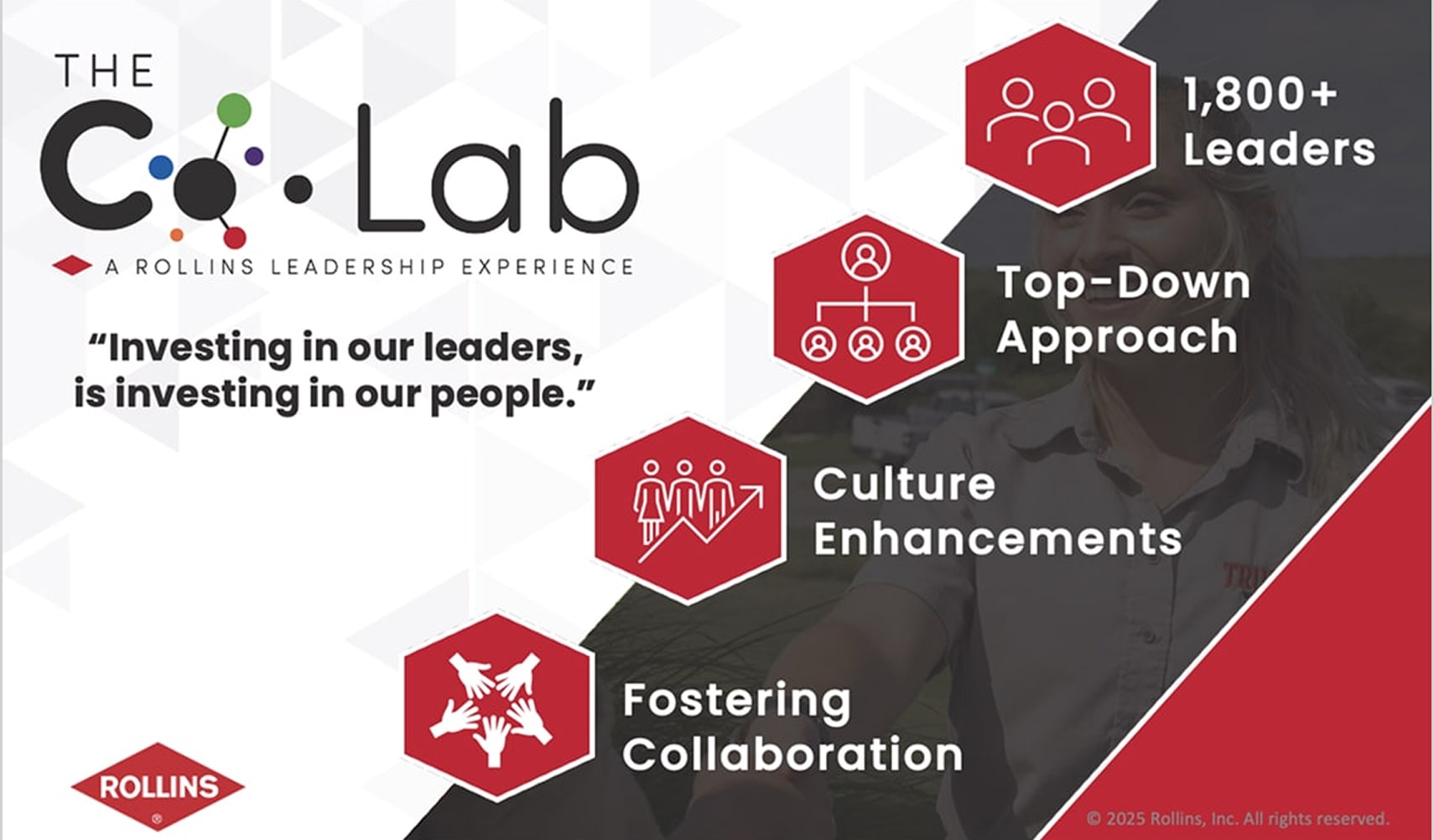
The core of the program — approximately 20 hands-on activities built around three servant leadership lenses:
- Growing Yourself: Growth Mindset, Emotional Intelligence, executive kickoff with senior Rollins leadership
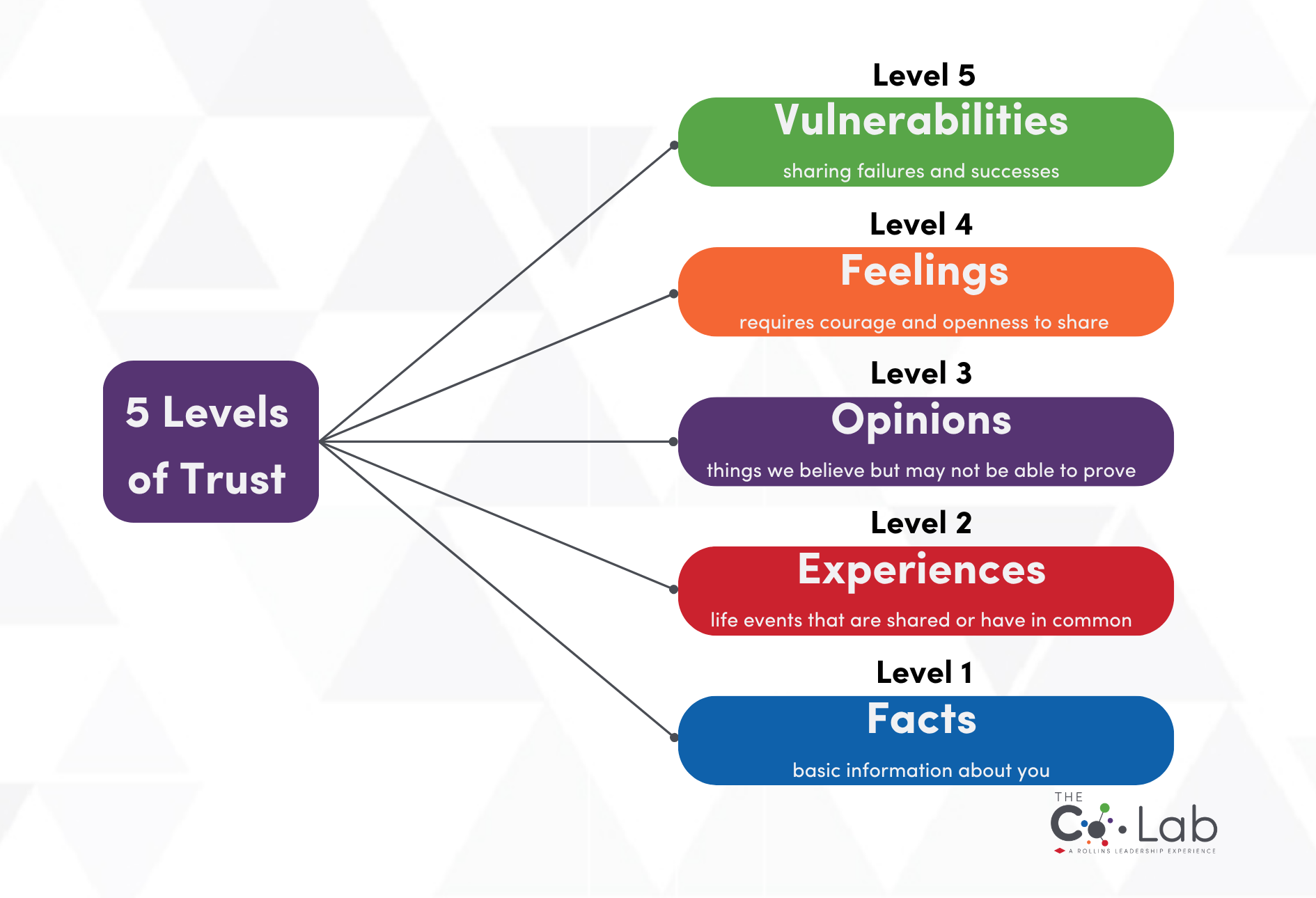
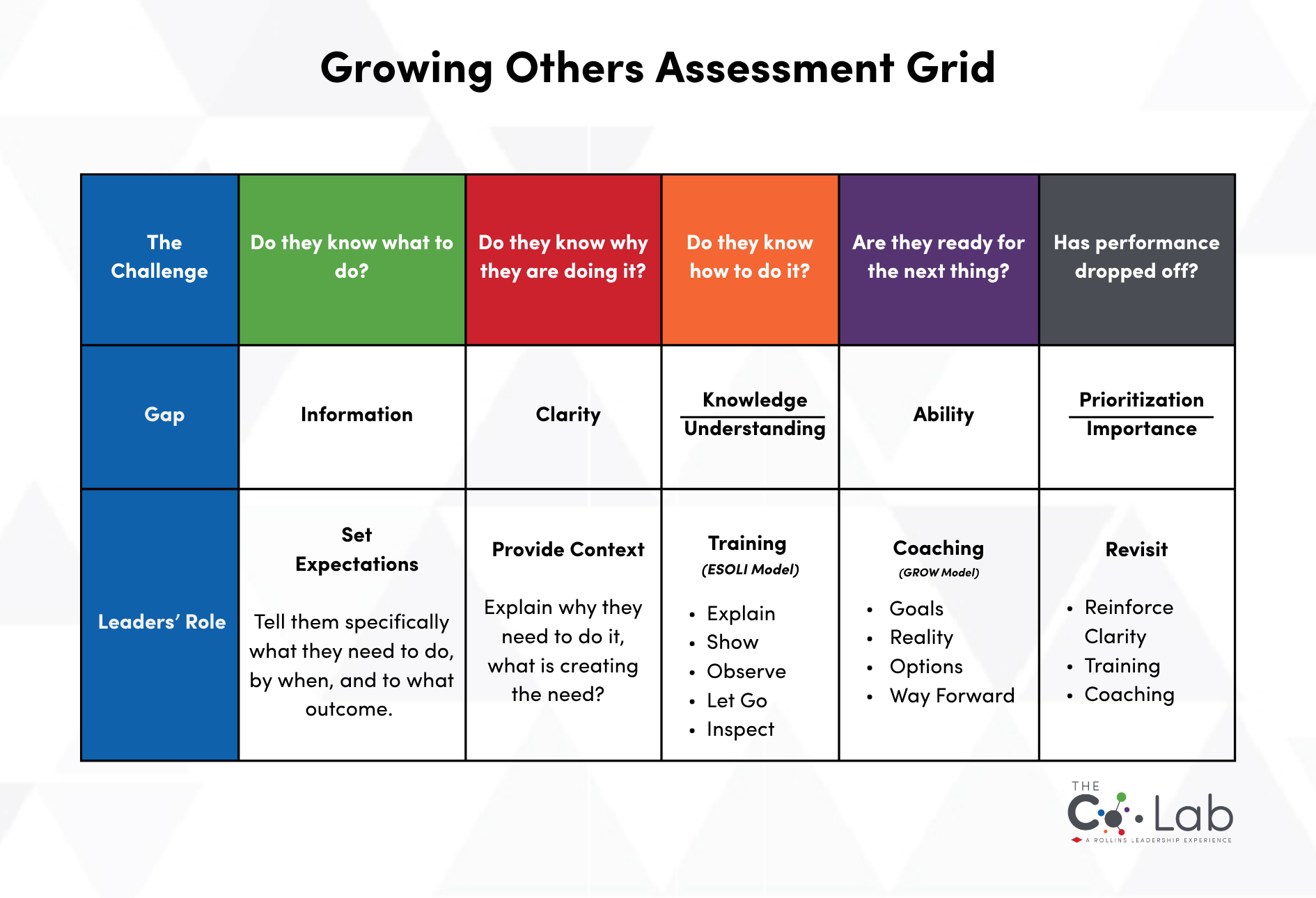
- Growing Others: Five Levels of Trust, Deep Listening, the G.R.O.W. coaching model, difficult conversations
- Growing the Business: Delegating decisions, risk storming
Thirty days apart, participants return for facilitated peer circles aligned to each workshop lens — structured time to apply concepts, share challenges, and hold each other accountable.
A 90–120 minute simulation puts participants in realistic leadership scenarios. Those who complete all stages earn their Co-Lab certificate, and their competencies are formally integrated into Rollins’ Talent Review process.
In the workshop, we had an opportunity to work together and grow by sharing our experiences and the diversity within our brands — which is really Rollins' superpower.
— Program Participant, Rollins, Inc.
The Results: 566 Leaders, 93% NPS, 85% Retention
In under a year, 566 leaders across 22 Rollins brands completed the Co-Lab across 24 cohorts. Phase 1 — all 90 Regional Managers — hit 100% completion by October 2025, ahead of schedule.
The satisfaction numbers speak for themselves: 95% recommendation rate and 93% NPS. Leaders aren’t just completing the program — 85% are still with Rollins eight months later, a retention rate that reflects what happens when people feel invested in.
Perhaps most meaningfully, Rollins built the program at fraction of what external alternatives would have cost, saving them a projected $8.8 million over the lifetime of the program.
A Culture That’s Catching
Beyond the numbers, something harder to measure is happening. Leaders from different brands who had never met are leaving as trusted colleagues — and carrying a shared leadership language back into their organizations.
The Co-Lab’s competencies are now woven into Rollins’ formal Talent Review process, and the program is expanding to Phase 2: ~1,400 Branch Managers. What started as Rollins’ first enterprise-wide leadership program is becoming the foundation of how the company develops leaders across every brand it owns.
Results at a Glance:

Brandon Hall Award Winner — Best Development Program for Frontline Leaders, 2026
See how Roundtable Learning designs blended leadership development programs that cross brand lines, reflect your culture, and deliver results leaders talk about long after the program ends.

Frequently Asked Questions
What is servant leadership training for frontline managers?
Servant leadership training for frontline managers teaches leaders to prioritize the growth and well-being of their teams over short-term task output. Effective programs develop self-awareness (growth mindset, emotional intelligence), interpersonal skills (trust-building, listening, coaching), and practical frameworks for developing others — such as structured one-on-ones, difficult conversation models, and delegation tools. When deployed at scale across multiple locations or brands, servant leadership programs create a shared leadership language that drives consistency, retention, and long-term performance.
How do you build a leadership development program across multiple company brands?
Building a leadership development program across multiple brands requires intentional design around cross-brand cohort mixing, a shared competency model, and brand-agnostic facilitation. Effective approaches cap the percentage of any one brand in a cohort, pair facilitators with brands they haven’t previously worked with, and structure peer learning so leaders from different companies can exchange approaches and align on shared standards. This creates cross-brand relationships and a unified leadership culture — particularly valuable in organizations that have grown through mergers and acquisitions.
What results can a frontline leadership development program deliver?
When designed as a blended, multi-touchpoint experience, frontline leadership programs consistently deliver high satisfaction and measurable behavior change. Rollins, Inc.’s Co-Lab program achieved a 95% recommendation rate and 93% NPS across 566 leaders trained — with an 85% retention rate among participants over eight months. Delivering the program internally at a fraction of the cost for alternatives demonstrating strong ROI.
How do you sustain learning after a leadership development workshop?
One-time workshops rarely produce lasting behavior change — sustaining leadership development requires structured touchpoints after the initial experience. Virtual peer circles, scheduled 30 days apart following a workshop, give participants dedicated time to apply concepts in their real work, share challenges, and hold each other accountable. When peer circles are paired with a capstone assessment, leaders demonstrate applied competency rather than just program completion, and the relationships formed continue informally long after the formal program ends.
How do you get senior executives actively involved in a leadership development program?
Executive involvement signals to participants that a program is a cultural priority, not a training obligation. Effective strategies include having the CEO or senior leaders personally open and close every cohort session, embedding executive-authored content into the curriculum (such as annotated reading notes or personal leadership principles), and integrating program competencies into formal talent review and succession processes. When leaders see their managers’ managers participating and referencing the program’s frameworks in day-to-day decisions, attendance becomes a mark of professional readiness rather than a compliance requirement.
Explore more