AT A GLANCE:
47% Faster Practical Evaluations | 37,000 trainer hours saved | 10x faster capstone | 2x Award Winning Training Program
A Fortune 500 logistics company needed faster, more consistent powered industrial truck (PIT) training across its distribution network. Roundtable Learning built AR forklift training that puts step-by-step guidance in the operator’s field of view while they drive real equipment. In the pilot, practical evaluations took 47% less time.
The Challenge: Forklift Training That Depended on Who Was Teaching
The client’s PIT training worked the way it does at most companies. A trainer walked operators through the controls, watched them practice, and graded them on paper. Most new hires had never operated a PIT before, and whether they were ready came down to one trainer’s judgment.
The client’s incident reviews tied a large share of PIT accidents to gaps in training or knowledge retention. That meant injuries, lost workdays, and equipment downtime.
The Stakes:
- New hires with no prior PIT experience
- Inconsistent instruction from site to site and trainer to trainer
- Evaluations that took up to three hours per operator, one-on-one with a trainer
- No view of the operator's perspective as an order picker rose toward the racking
- Manual record-keeping that was slow and hard to compare across sites
Historically, PIT training is very subjective. We rely on the trainer's experience and their knowledge base to determine whether or not an individual is properly trained before they actually go out on the floor.
— Program Manager,
Safety Learning & Development
The Solution: Augmented Reality on a Moving Forklift
The idea started with the client’s safety learning team. They saw Magic Leap’s mixed reality headset at an industry conference and wondered if it could work on a moving forklift. They brought the idea to Roundtable Learning, and together we built and tested each version at different client sites with experienced PIT trainers.
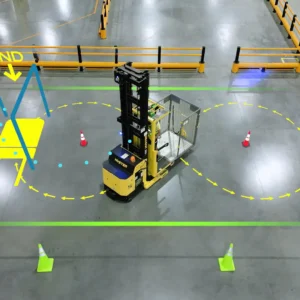
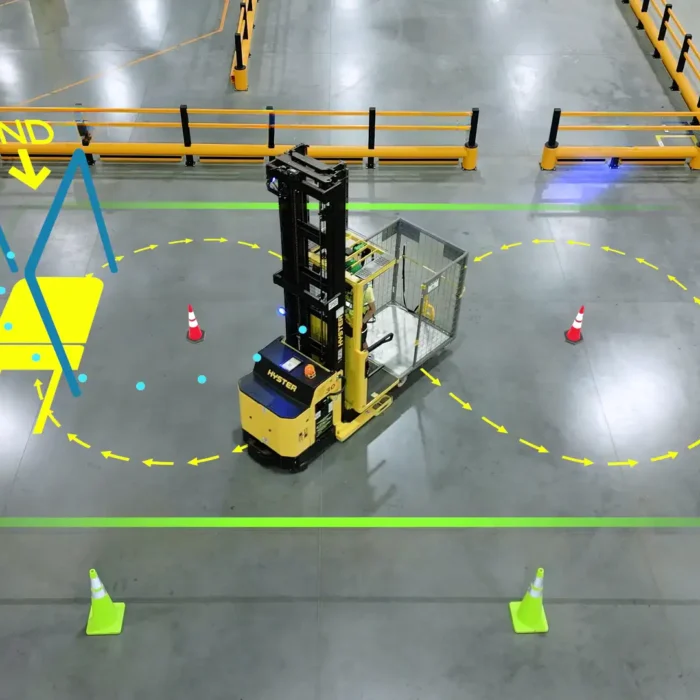
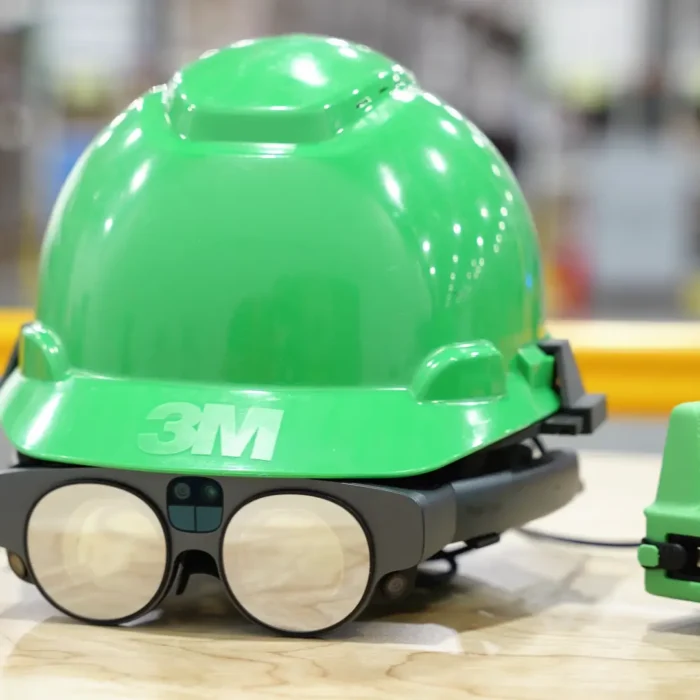
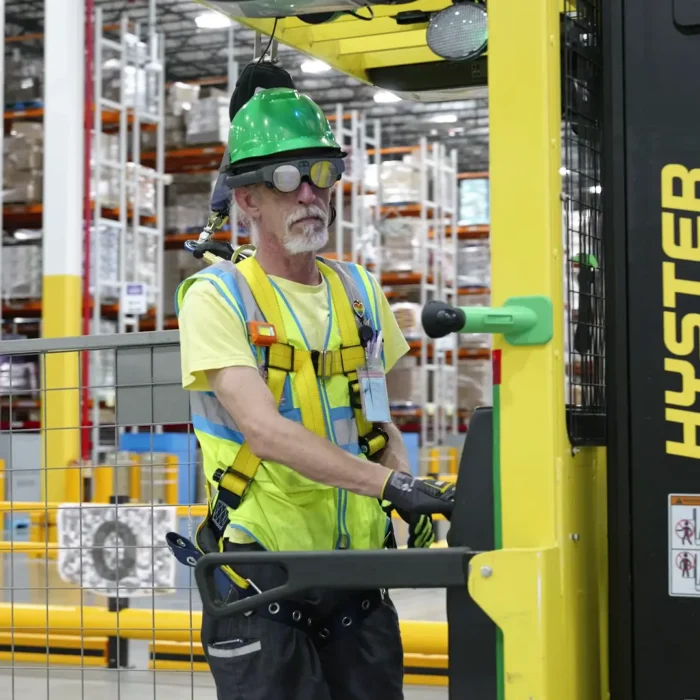
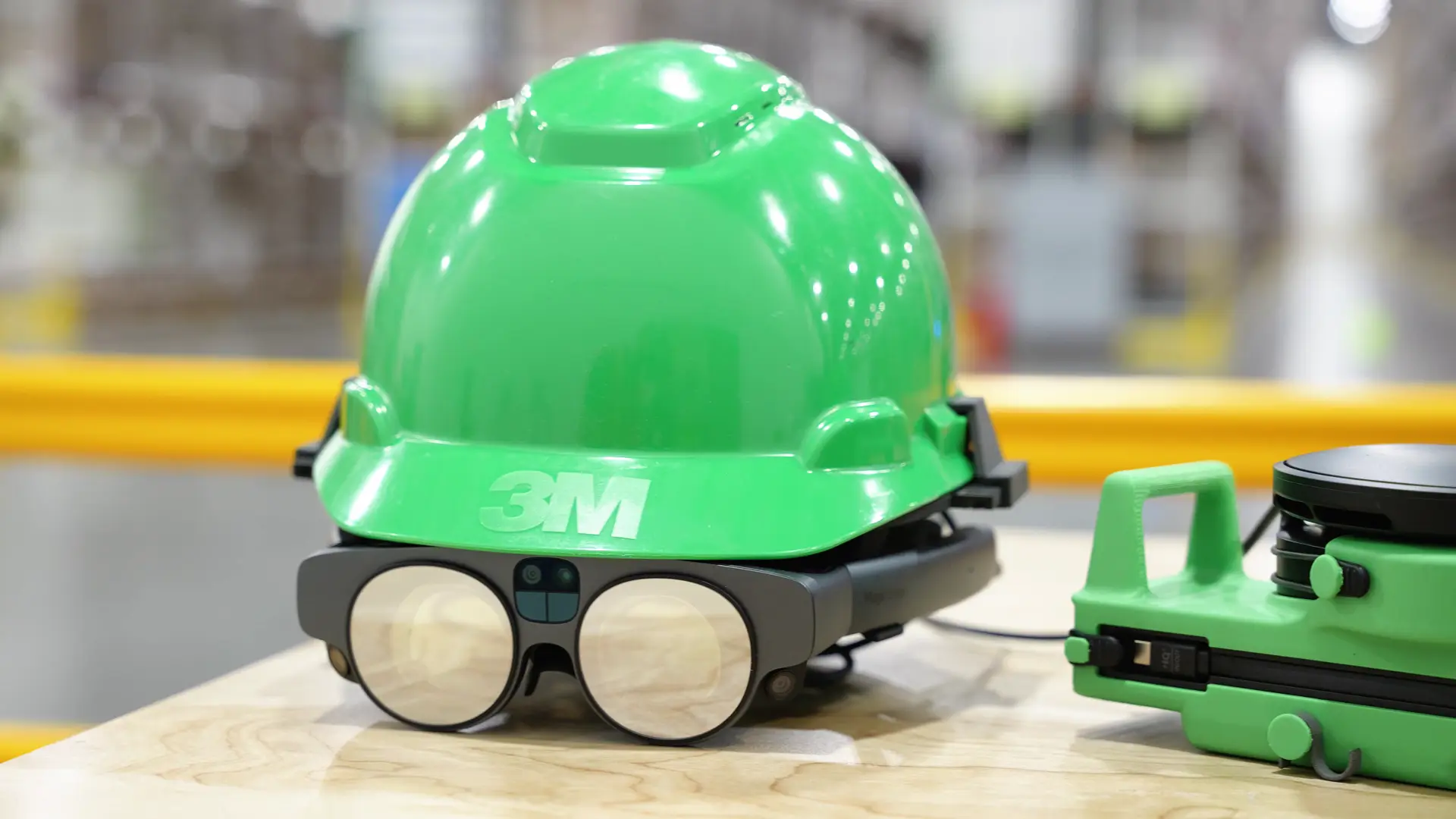
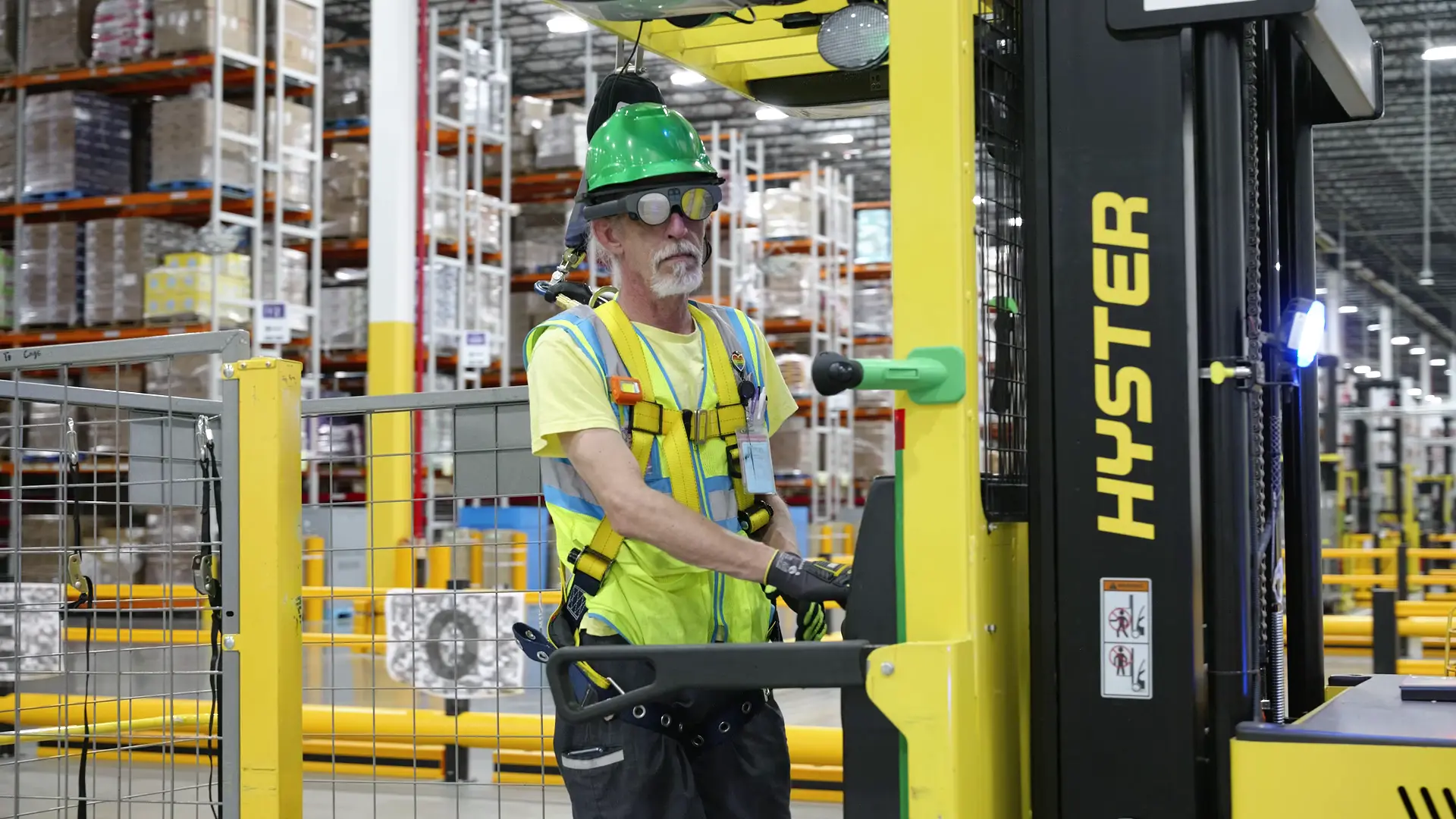
The result puts augmented reality on live PIT equipment. Operators wear a Magic Leap 2 headset mounted to a standard hard hat and drive a real order picker while digital paths, obstacles, and instructions appear on the floor around them.
How It Works
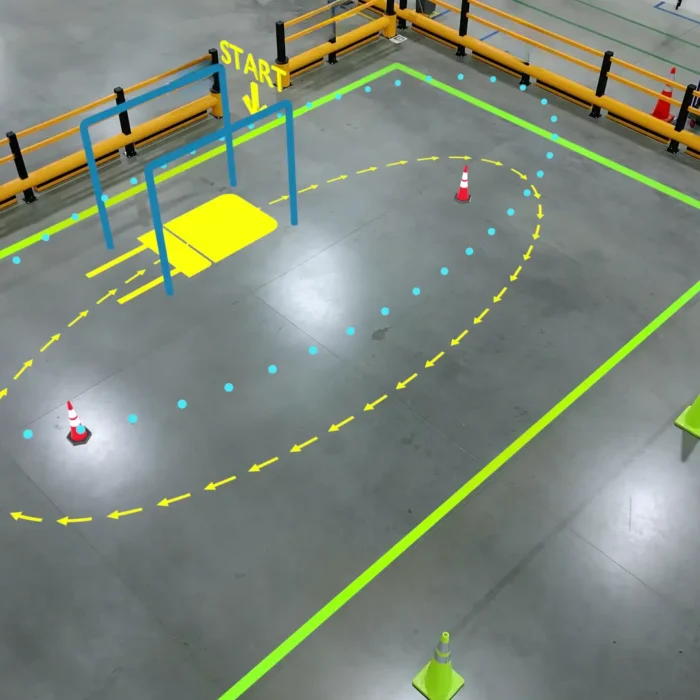
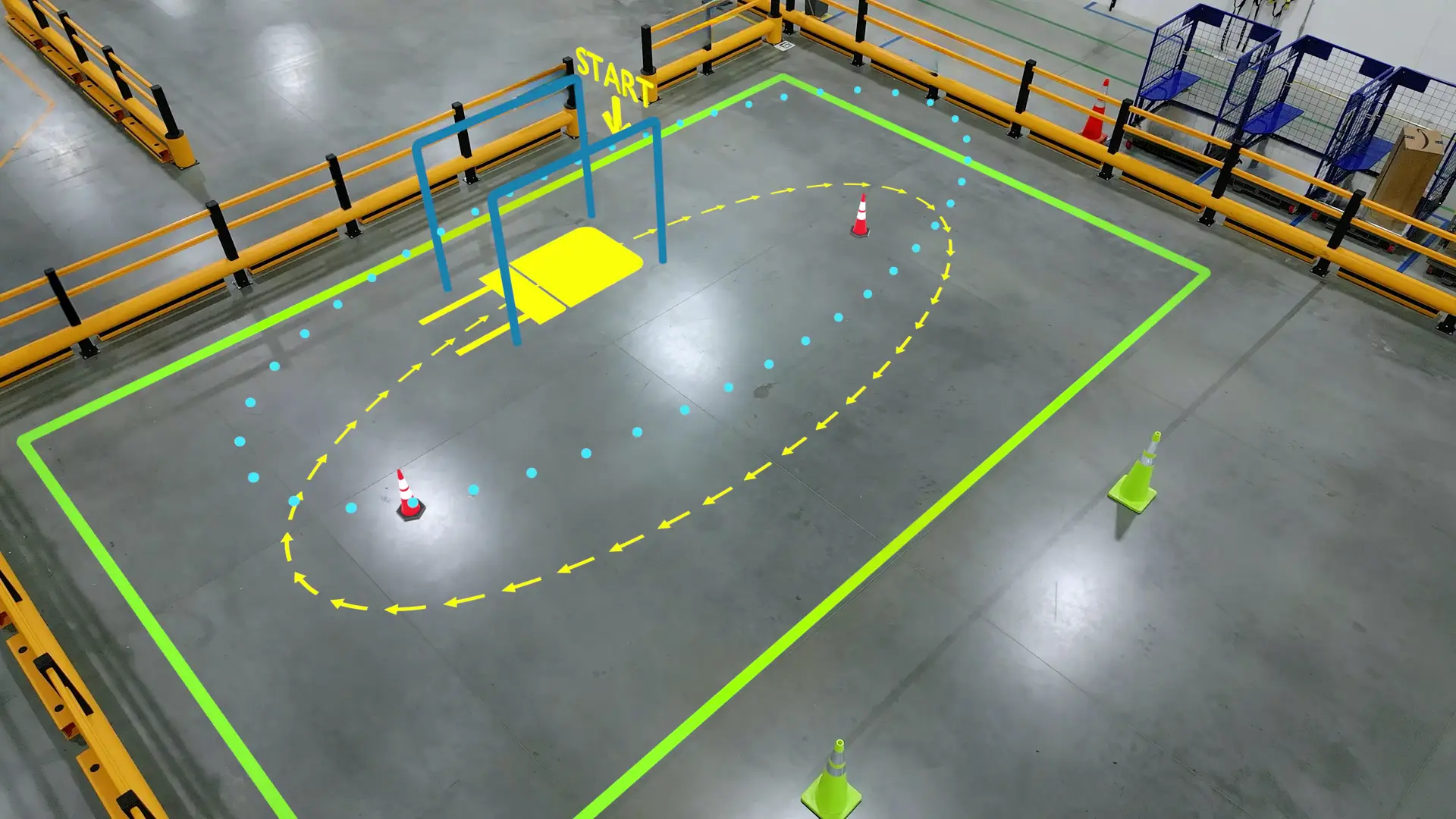
- Map the corral. The training area is digitally mapped, and AR driving courses are anchored to the real floor.
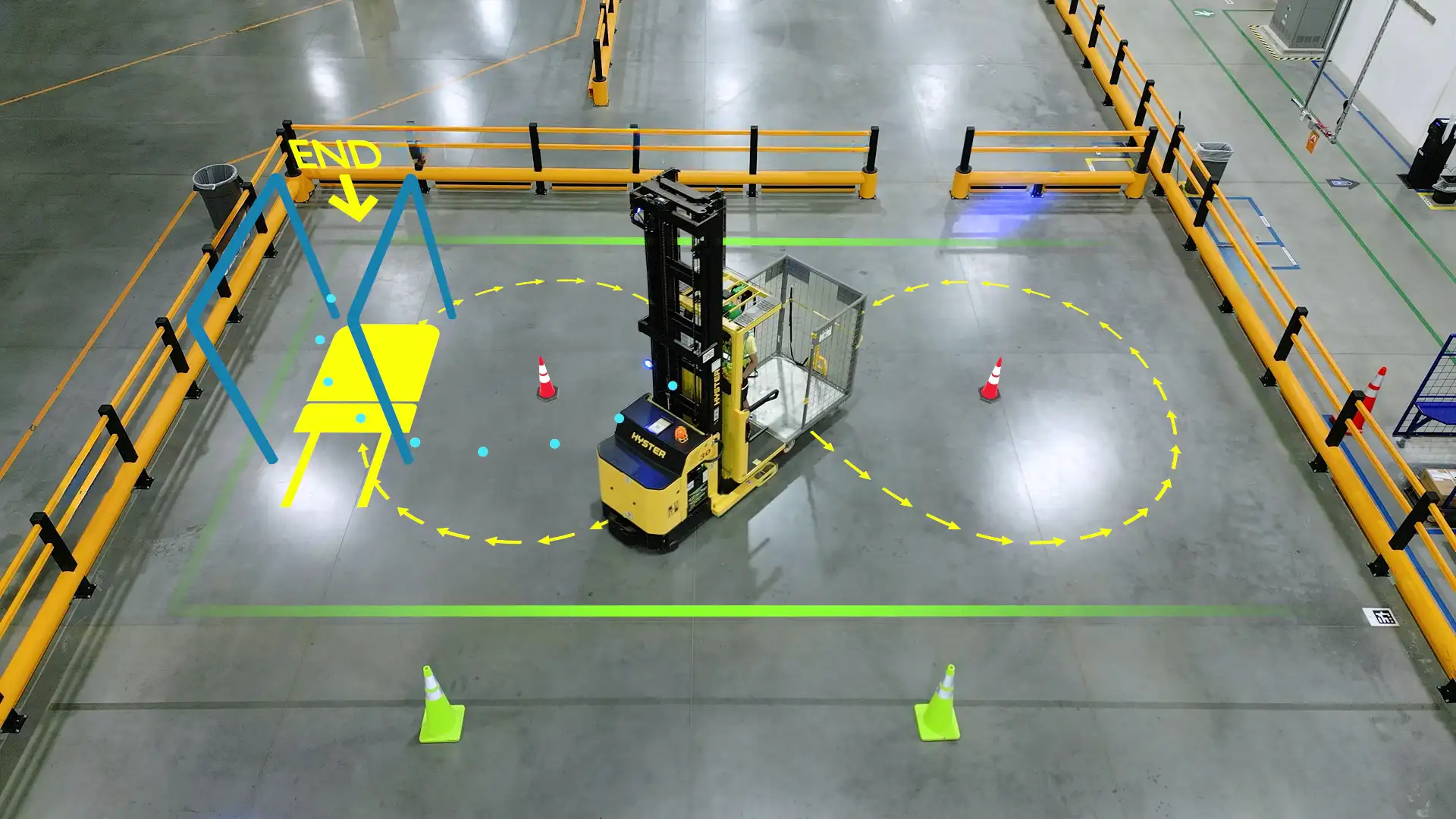
- Drive with guidance. Operators follow a dotted path through ovals, figure 8s, right-angle turns, and raising the platform into the power zone.
- Get scored on every run. The system measures attention (looking in the direction of travel) and accuracy (staying on the path and clear of obstacles).
- Finish with a capstone. Common corrective maneuvers, such as cage-in, nose-in, and three-point turns, are combined into one exercise.
- List ItemGo unguided. The prompts drop away and package order is randomized, so learners have to apply the procedure instead of memorizing it.
Adults learn by doing. Mixed reality affords that opportunity to say, okay, you've got the base knowledge from the classroom, but now let's have you learn by doing.
— Program Manager,
Safety Learning & Development
Making AR Work in Motion
AR headsets aren’t built for moving vehicles. The team used a controller mounted on the equipment as a moving reference point, so the headset tracks both the operator and the truck at speed. A custom battery accessory keeps it running through hours of back-to-back sessions.
A Coach in the Operator’s Line of Sight
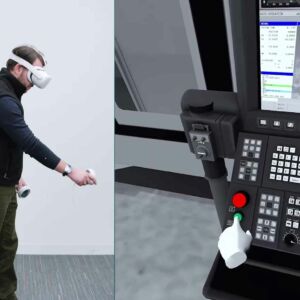
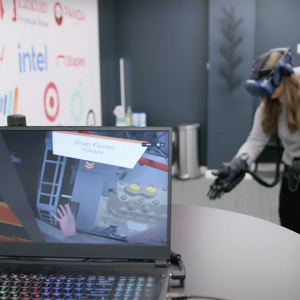
With Mercury XRS, trainers see the operator’s live point of view on a laptop, coach over voice chat, and replay sessions afterward.
The Results: Faster Certification and One Standard for Every Operator
The pilot beat the client’s conservative targets and gave it the evidence to move to a phased rollout across its network.
What Changed for the Client
Trainers certify more operators in less time. Total evaluation time fell 47%. Three corrective maneuvers that used to take 47 minutes now take 4 minutes 26 seconds as one capstone. That trainer time goes back to the floor.
Every operator is held to the same standard. Best practices are built into the overlays, so instruction no longer depends on who’s teaching or where.
Safety is moving in the right direction. Equipment data showed fewer hard-impact events after AR training, and early deployments saw fewer recordable and lost-time incidents.
Trainers get a second set of eyes. Every session is scored and recorded in Mercury XRS, so readiness is objective and safety teams can compare sites using real data, not paper checklists.
Built to grow. The client plans to extend the platform to other PIT types, refresher training for experienced operators, and topics like lockout/tagout and emergency response.
Results at a Glance:


Brandon Hall Award Winner
Best Extended Reality for Workplace Learning
Brandon Hall Award Winner
Best Advance in Augmented and Virtual Reality
See how Roundtable Learning builds AR and VR forklift training that measures real performance and gives trainers a view from the driver’s seat.

Frequently Asked Questions
What is AR forklift training?
AR forklift training uses an augmented reality headset to place digital guides, paths, and obstacles over a real forklift and a real warehouse floor. Unlike a VR simulator, the operator drives actual equipment and still sees their surroundings, while step-by-step instructions appear in their field of view. It is used to train and evaluate powered industrial truck (PIT) operators more consistently and safely.
How does augmented reality work on a moving forklift?
Most AR headsets lose tracking when the user is on a moving vehicle. Roundtable Learning solved this by mapping the training area, anchoring the digital course to the floor, and using a controller mounted on the equipment as a moving reference point. The Magic Leap 2 headset then tracks both the operator and the truck in real time, at speed and at heights up to 40 feet.
Is it safe to wear an AR headset while operating a forklift?
It can be, with the right hardware and setup. See-through lenses like those on the Magic Leap 2 let operators see the real world directly instead of through a camera feed, so there is no lag or visual distortion. In this pilot, headsets were mounted to standard hard hats, no safety incidents were linked to the AR technology, and no operators reported vertigo or disorientation.
How much time can AR save in forklift operator evaluations?
In this pilot, total practical evaluation time dropped by 47% compared with traditional methods. Three corrective maneuvers that took an average of 47 minutes were combined into one AR capstone exercise completed in 4 minutes and 26 seconds. Early data also points to refresher training time savings of more than 40% for experienced operators.
How do trainers see what a forklift operator sees in AR training?
The operator’s headset streams their point of view to the trainer’s laptop through Roundtable Learning’s Mercury XRS platform. Trainers can coach over live voice chat, replay sessions afterward, and review data such as attention, path accuracy, completion time, and obstacle collisions. That replaces manual note-taking with consistent, recorded evaluations.
Explore more